
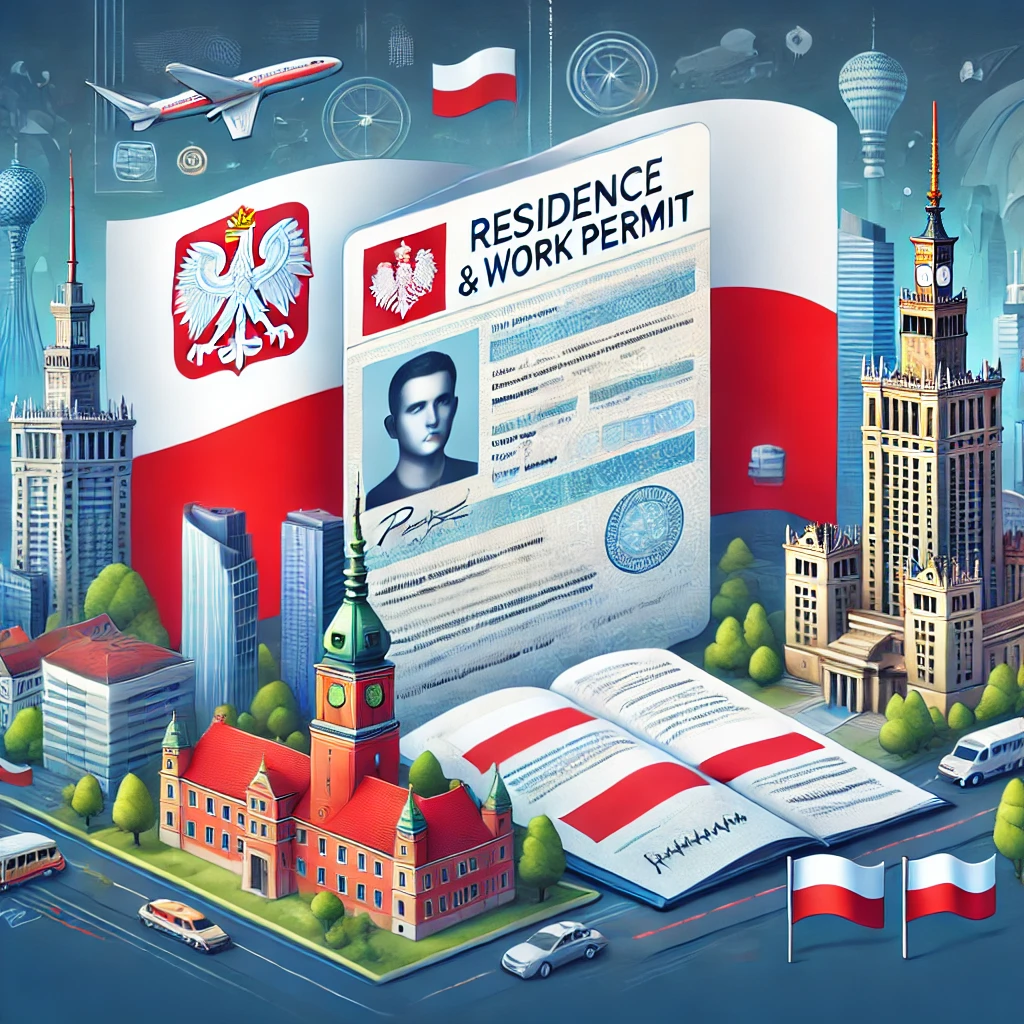
Work and Residence Permit in Poland: Legal Processes and Requirements
Introduction
Poland, as one of Europe's rapidly developing economies, has become an attractive place for immigrants to live and work. Obtaining a residence and work permit in Poland requires legal processes that vary depending on the applicant's personal and professional status. This article details the ways to obtain a residence and work permit in Poland, the necessary documents, and the process.
1. Types of Residence Permits (Karta Pobytu)
1.1. Short-Term Residence Permit
- Schengen Visa: Valid for short-term stays of up to 90 days.
- Purposes: Tourism, business trips, or family visits.
- Conditions: Return guarantee, financial sufficiency, and health insurance.
1.2. Temporary Residence Permit
Suitable for individuals planning to stay longer than 90 days.
- Purposes: Work, education, or family reunification.
- Duration: Generally valid for 1-3 years and renewable.
1.3. Permanent Residence Permit
Individuals who have resided in Poland with a temporary residence permit for at least 5 years are eligible to apply.
- Requirements: Polish language proficiency, financial independence, and no criminal record.
1.4. Long-term EU Residence Permit
Poland grants certain rights throughout the European Union to individuals residing there for an extended period.
2. Types of Work Permits (Zezwoleneie na Pracę)
2.1. Employer-Sponsored Work Permit
- This applies to individuals who have received a job offer in Poland.
- Requirements: The employer must prove that the position cannot be filled by a Polish or EU citizen.
2.2. Temporary Work Permit (Type A)
- It is given for working in temporary jobs.
- Duration: Generally valid for 1 year and depends on the employer.
2.3. Seasonal Work Permit (Typ S)
- It is suitable for individuals who want to work in agriculture, tourism, or seasonal sectors.
- Condition: The job must be seasonal.
2.4. Freelance and Entrepreneur Work Permit
- This is suitable for individuals who want to work independently or start their own business in Poland.
- Requirements: Business plan, economic sustainability, and sufficient capital.
3. Work and Residence Permit Application Process
3.1. Required Documents
- Valid passport and biometric photograph.
- Employment contract or employer sponsorship document.
- Health insurance policy.
- Proof of financial sufficiency.
- Educational or professional qualification certificates.
3.2. Process
- Application Preparation: All necessary documents are prepared completely and submitted to the Polish Immigration Office (Urząd Wojewódzki).
- Biometric Data: Fingerprint and photo collection processes are completed.
- Evaluation Process: Work and residence permit applications are generally processed within 1-3 months.
3.3. Renewal Process
Residence and work permits are generally issued for a limited period. For renewal:
- The application must be submitted before the current permit expires.
- Documents proving that the employment status and accommodation conditions are still in effect must be submitted.
4. Permissions for Family Reunification and Education Purposes
4.1. Family Reunification Permit
This is provided for family members of individuals who have a residence permit in Poland.
- Requirements: Sufficient income and suitable accommodation must be provided.
4.2. Residence Permit for Educational Purposes
This is suitable for students who want to pursue university education in Poland.
- It includes the right to work part-time during the education period.
5. Legal Support and Professional Consulting
5.1. Management of Legal Processes
The procedures for obtaining residence and work permits in Poland are complex, and errors can lead to application rejection.
- Immigration lawyers: They ensure you submit the correct documents and expedite the process.
5.2. Monitoring Current Immigration Policies
Immigration policies in Poland are subject to regular updates. Staying up-to-date with current regulations increases the success rate of your application.
Conclusion
Obtaining a residence and work permit in Poland requires different processes depending on the individual's personal and professional situation. Permissions can be obtained through methods such as employer sponsorship, temporary permits, and family reunification. Proper management of the legal aspects of the process ensures a quick and smooth application process.
This article serves as a guide for individuals wishing to obtain a residence and work permit in Poland. For further information, it is recommended to contact the Polish Migration Office or a qualified consultant.


About Post Author
