
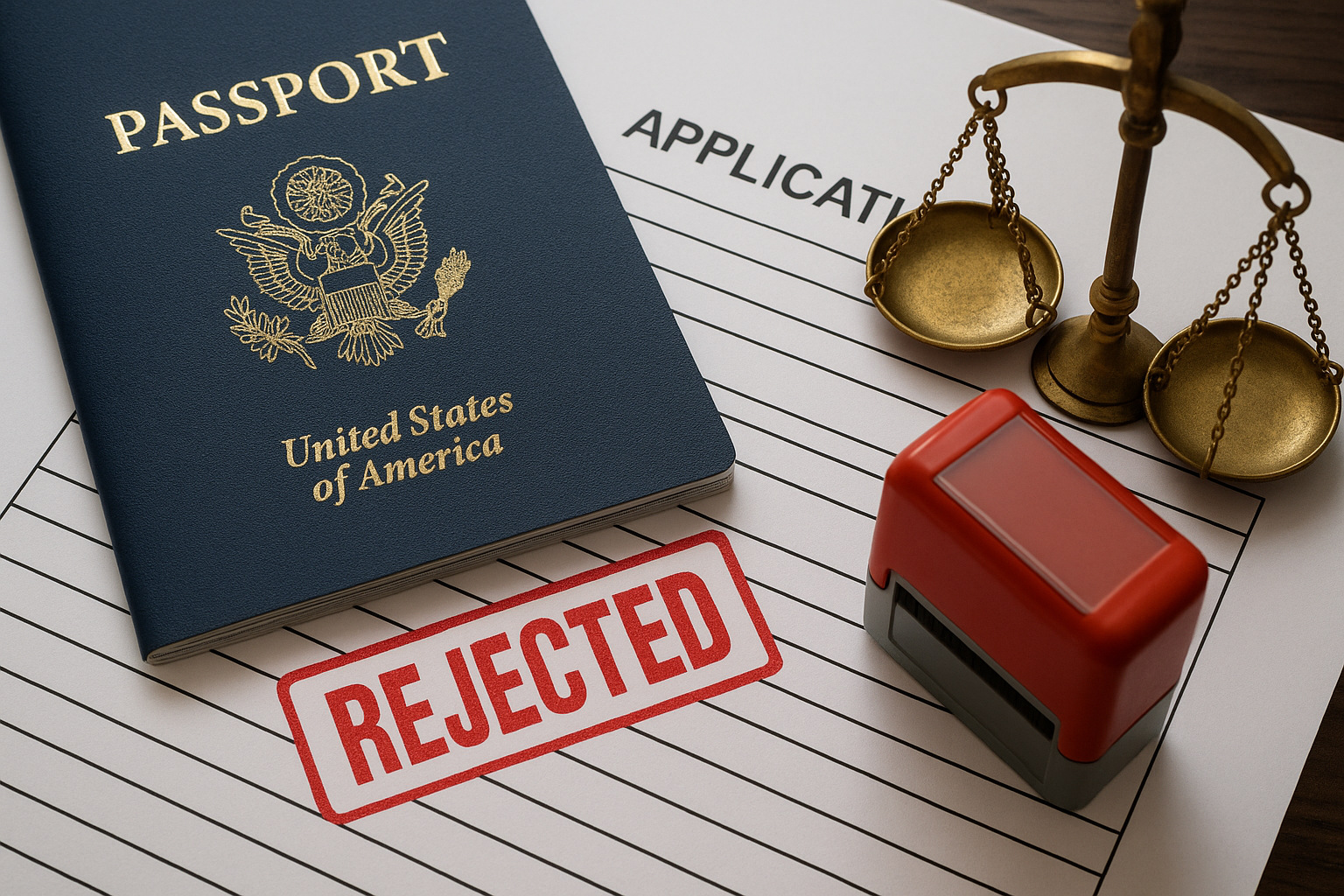
What to do if your E-2 visa application is rejected? - Istanbul Lawyer
The E-2 Investor Visais one of the most prestigious non-immigrant visa categories for individuals who want to live and work in the United States by making an investment. However, not every application is successful. Even if investments have been made, documents prepared, and interviews conducted, an E-2 visa application may be rejected. Such rejections can be devastating for the investor, both financially and emotionally.
So, what are the legal and practical steps to take in such a situation?
This article provides a detailed assessment of the reasons for E-2 visa refusal, the legal implications of refusal, the re-application process, the right to appeal, and strategic recommendations
1. What is an E-2 Visa and Why is it Rejected?
1.1 E-2 Visa Brief Description
The E-2 visa is a type of non-immigrant visa that allows citizens of countries with a Trade and Friendship Treaty with the United States temporary residency and work rights in the US by making an investment . The investment must be real, active, non-marginal, and at risk.
1.2 Reasons for E-2 Visa Refusal
E-2 visa denials by US Consulates or USCIS can be based on a number of different reasons:
A. Insufficient Investment
-
The investment amount was not considered "substantial" (significant),
-
It is a passive investment (for example, simply buying real estate),
-
The investment is not yet complete.
B. Inadequacy of the Business Plan
-
The business plan being vague, weak, and incomplete,
-
The financial projections are unrealistic,
-
The employment plan is inadequate.
C. Missing or Inconsistent Documents
-
Failure to prove the source of investment,
-
There are contradictions between the documents
-
Company documents are insufficient or inaccurate.
D. Issues Related to the Role of the Investor
-
Insufficient evidence is provided to demonstrate that the investor will personally manage the company
-
The applicant's education, professional experience, or profile does not match the investment.
E. Visa Officer's Discretion
-
Doubts arising during the interview,
-
Lack of confidence,
-
The person must be convinced of their intention to settle in the United States.
It should be remembered that since the E-2 visa is a "non-immigrant" status, even suspicion of intention to stay permanently can be grounds for refusal
2. What to do after an E-2 visa rejection?
2.1 Is the Rejection Decision in Writing?
U.S. Consulates typically notify applicants of a refusal verbally or in writing using DS-5535 or DS-160 refusal forms . One of the following refusal codes is usually used:
-
214(b): If it is believed that there is an intention to immigrate, and the binding ties are considered weak,
-
221(g): Incomplete documents, the file is still under review.
-
Administrative Processing: Additional security checks required.
The first step is to clearly understand the reasons for the rejection and obtain a copy of the entire application file.
3. Options to Follow After Rejection
3.1 Re-Application
After an E-2 visa application is rejected, the same applicant can reapply without any waiting period. However:
-
The reasons for the previous rejection should be carefully analyzed
-
Necessary corrections and new documents should be added
-
The new application must clearly state the previous rejection and present counterarguments.
In many cases, a new and robust business plan, complete documentation, and a well-prepared interview can overcome an initial rejection.
3.2 Administrative Review
When an E-2 visa application is rejected at the consulate, the decision can be reviewed administratively . However, this is not a systematic right to "appeal." After the rejection:
-
New documents can be submitted
-
Details that may have escaped the interviewer's attention can be presented again.
3.3 Applying to USCIS
In some cases, it is possible to obtain an E-2 status through a change of status from within the US . For example:
-
If you entered the US on a tourist visa,
-
If the company has been established,
-
If an investment has been made,
Applications can be made to USCIS using Form I-129.
This method can be considered as an alternative after a consular refusal.
However, changing status within the US travel restrictions abroad .
4. Strategic Legal Steps
4.1 File Analysis After the Rejection Decision
The first thing to do after a rejection is to have the case professionally analyzed.
-
The application process is reviewed from start to finish
-
The business plan, investment amount, and financial documents are re-evaluated
-
Potential mistakes made during the interview are identified.
4.2 New Application Strategy
Things to consider when preparing a new application:
-
Missing documents must be completed
-
Increased investment should be evaluated (additional expenses should be documented if necessary),
-
The business plan should be revised at a professional level.
In practice, many people whose initial application is rejected are able to successfully obtain a visa with a stronger second application.
5. Preventive Measures to Avoid Rejection
5.1 Preparing a Qualified Business Plan
-
5-year financial projection,
-
The commitment to job creation
-
Sector analysis and competitive assessment.
5.2 Documents Must Be Consistent and Compatible
-
Documents such as bank statements, rental agreements, and equipment invoices must be complete and consistent
-
A verifiable source investment fund should be used.
5.3 Interview Preparation
-
The company's structure, plan, and the rationale behind the investment must be clearly presented to the visa officer
-
The applicant's intention and role should be clearly stated
-
Questions should be answered confidently and with supporting evidence.
6. Will an E-2 refusal affect other visa applications?
Yes. E-2 visa refusal:
-
This could raise suspicions of immigration intent in future B1/B2, F-1, or other visa applications .
-
In particular, refusals given under section 214(b) must be declared on DS-160 forms
-
However, a successful re-application can resolve this issue.
CONCLUSION
If an E-2 visa application is rejected, the process doesn't end there.
A rejection shouldn't be seen as the end; it should be considered an opportunity to correct mistakes.
By reassessing the nature of the investment, the consistency of the documents, and the applicant's role, it is possible to obtain a visa with a strong application.
The business plan and interview performance are particularly critical.
If your application is rejected, before panicking, you should seek legal assistance, carefully analyze the case, and strategically restructure it. Obtaining professional advice from a lawyer specializing in immigration law plays a crucial role in ensuring the success of the process.


About Post Author
