
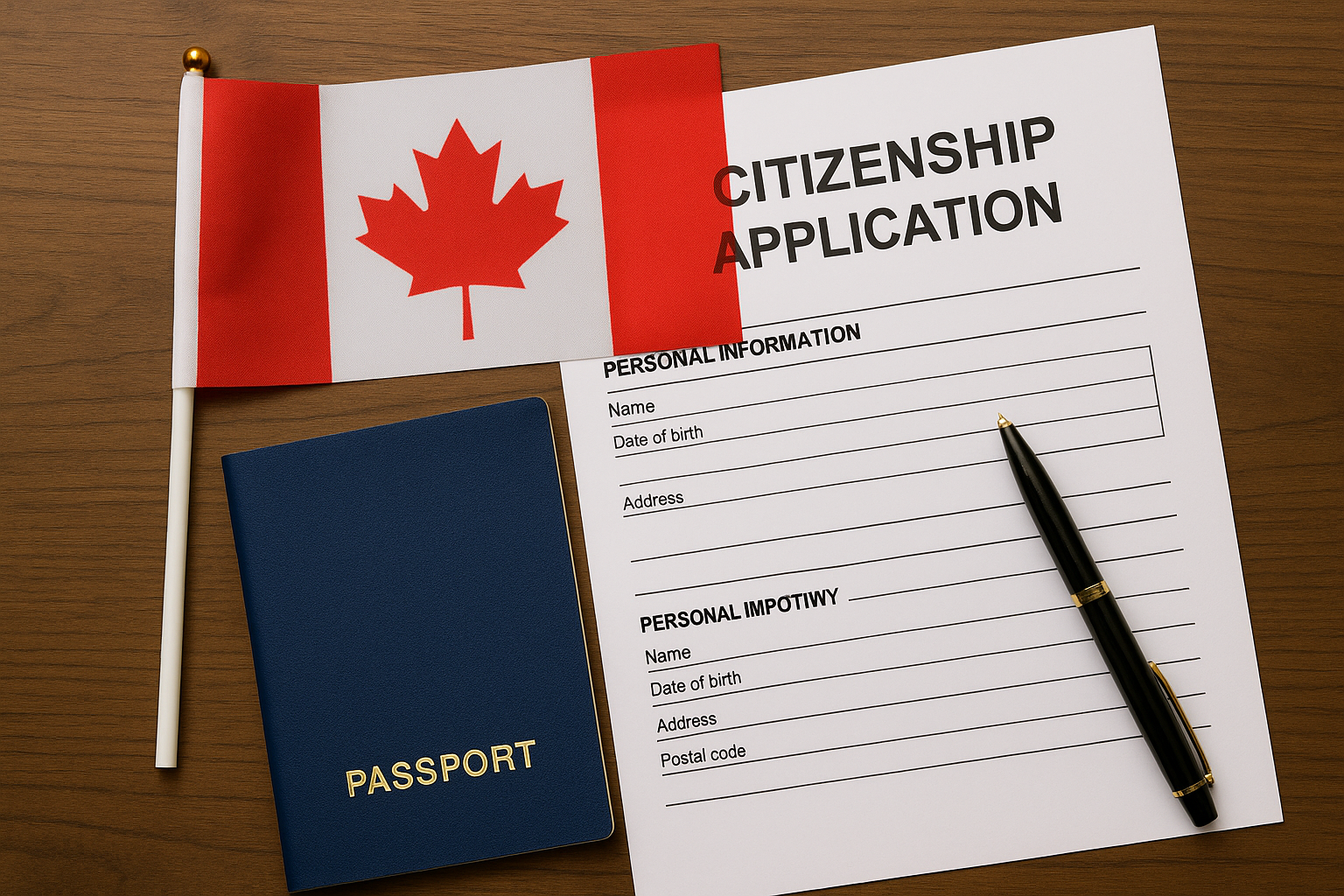
What are the legal requirements for obtaining Canadian citizenship?
Entrance
Canada welcomes thousands of foreign nationals each year thanks to its immigration-friendly policies, economic opportunities, and social welfare system. For many who obtain temporary or permanent residency in Canada, the ultimate goal is to become a Canadian citizen. However, Canadian citizenship requires the fulfillment of certain legal conditions.
This article will detail the legal framework for obtaining Canadian citizenship, the provisions of the Citizenship Act, citizenship application processes, proof of eligibility, grounds for refusal, and the right to appeal.
1. The Basic Legal Basis for Obtaining Canadian Citizenship
Citizenship Act (RSC, 1985, c. C-29)
Canadian citizenship law is governed by the Citizenship Act, enacted in 1947 but updated with various reforms since 1985. Citizenship can be acquired by birth or through naturalization.
2. Ways to Obtain Canadian Citizenship
A) Citizenship by Birth
Every individual born in Canada automatically becomes a Canadian citizen regardless of their parents' status (the jus soli principle). However, this is the general rule, with diplomatic exceptions.
B) Citizenship by Descent
Children born outside of Canada can obtain Canadian citizenship if one of their parents is a Canadian citizen. However, this right applies only to the first generation; it does not automatically pass to the second generation.
C) Subsequent Citizenship (Naturalization)
Foreign nationals can become Canadian citizens by residing in Canada for a specific period and meeting the legally required conditions.
3. Legal Requirements for Becoming a Canadian Citizen Through Naturalization
Individuals holding permanent residency (PR) in Canada can apply for citizenship by meeting the following requirements:
1) Becoming a Permanent Resident (PR)
Applicants must currently hold valid PR status at the time of application. Those whose PR status has been suspended or who have a deportation order against them are ineligible to apply.
2) Physical Duration of Stay in Canada
Applicants must have physically resided in Canada for at least 1,095 days (3 years) within the 5 years preceding the application date. Proof of this period can be provided through passport records, tax returns, and entry/exit records.
Citizenship Act, p. 5(1)(c): “has been physically present in Canada for at least 1,095 days during the five years immediately before the date of application.”
3) Filing a Tax Return
Applicants must have filed tax returns with the Canada Revenue Agency (CRA) for at least three years within the last five years, as of the application period.
4) Language Proficiency
Applicants aged 18 to 54 must demonstrate proficiency in either English or French. This is usually evidenced by the following documents:
-
IELTS/CELPIP results (CLB Level 4 or higher)
-
Academic documents obtained in Canada (e.g., bachelor's degree)
-
Language school certificates
5) Citizenship Test and Interview
The Canadian Citizenship Knowledge Test is administered to individuals aged 18 to 54. This test covers Canada's history, political system, legal order, and values. Those who pass the test are also interviewed individually by an IRCC officer.
6) Criminal Record and Security Check
The applicant must not have been convicted of a serious crime in Canada or another country. Applications may be rejected for individuals with an active case, execution, or criminal record issue.
4. Application Process and Documents
Required Documents:
-
IMM 0008 application form (or relevant e-form)
-
PR card photocopy
-
Photocopies of passports (with entry and exit dates)
-
Language proficiency certificates
-
Tax returns (CRA tax documents)
-
2 biometric photos
-
Application fee (530 CAD citizenship fee + 100 CAD eligibility fee)
Application Method:
-
Electronic application via IRCC's online portal
-
Or a physical application in paper format
5. Grounds for Refusal and the Right to Legal Appeal
Reasons for Rejection:
-
Failure to prove the duration of physical residence
-
Criminal record or security issue
-
Submission of forged documents
-
Incomplete application or false statement
-
Violation of immigration conditions (e.g., behavior violating work restrictions)
Legal Remedies and Appeals:
Applications that are rejected may be reviewed by the Federal Court of Canada through Judicial Review. During this process, the legality of the administrative action may be challenged on procedural or substantive grounds.
6. Rights and Obligations After Obtaining Citizenship
Upon acquiring Canadian citizenship, the following rights are granted:
Rights:
-
Obtaining a Canadian passport
-
The right to vote and stand for election
-
Not losing citizenship if living outside of Canada
-
Consular protection
-
Appointment to public office
Responsibilities:
-
Responsibility to vote
-
Compliance with Canadian laws
-
Having dual citizenship can lead to double tax liabilities
7. Citizenship Revocation Cases
In some cases, Canadian citizenship can be revoked after it has been acquired. These include:
-
Obtaining citizenship through fraud or false declaration
-
War crime, crime against humanity
-
Connection with a terrorist organization
-
Espionage
The decision to revoke membership is made by the IRCC, but the individual can appeal to the Federal Court for a review of the decision.
8. Dual Citizenship and Integration with Türkiye
Canada recognizes dual citizenship. A Turkish citizen who acquires Canadian citizenship does not lose their Turkish citizenship. However, for certain obligations, such as military service, inheritance, and taxation, the laws of both countries must be considered together.
Conclusion
The process for obtaining Canadian citizenship is quite orderly and legally sound. The process may need to be tailored to the individual circumstances of each applicant. Citizenship applications must be conducted with complete documentation and a sound legal strategy.
Errors, particularly regarding matters such as length of residency, tax returns, and criminal records, can result in the rejection of your application. Therefore, seeking support from a specialist immigration lawyer or consultant is crucial.
Gamze Akbulut, Law Faculty Student


About Post Author
