
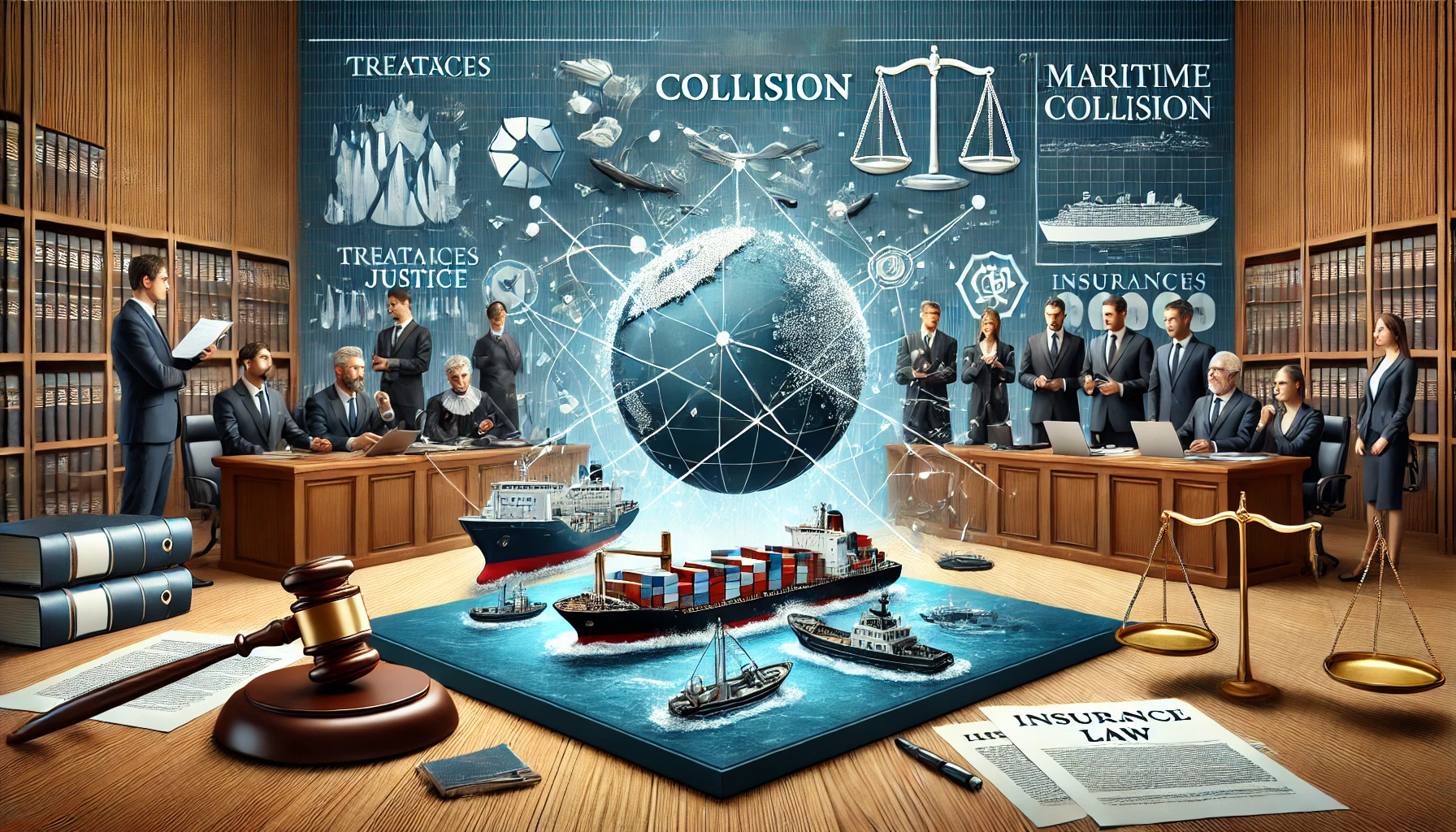
Ship Collisions and Legal Consequences
Legal Review of Ship Collisions
Contents
- Entrance
- Legal Basis of Ship Collisions
- Liability in Ship Collisions
- Compensation and Insurance
- International Judicial Bodies
- Case Studies
- Environmental Damage After Collision
- Legal Regulations and Innovations
- Conclusion
Entrance
Ship collisions are an integral part of maritime transport and trade. These incidents can cause both material and environmental damage and have various legal consequences. The legal aspects of ship collisions encompass important issues such as determining liability, compensation claims, and insurance. It is crucial to examine in detail the legal basis of ship collisions, how they are addressed under international maritime law, and the legal mechanisms used in these processes.
Legal Basis of Ship Collisions
International Maritime Law
International maritime law sets out the rules and responsibilities relating to ship collisions. These rules are designed to ensure the safe navigation of ships at sea and to prevent collisions. The rules established by the International Maritime Organization (IMO) regulate how ship collisions should be prevented and how to handle such incidents when they occur.
COLREG (International Code for Preventing Collisions at Sea)
COLREG is a set of international rules designed to prevent ship collisions. These rules define how ships should behave at sea, the circumstances under which they have a yield obligation, and the precautions to be taken in the event of a collision risk. COLREG is a fundamental regulation applicable to all ships and aims to improve safety at sea.
Liability in Ship Collisions
Defect Principle
In ship collisions, liability is generally based on the principle of fault. This principle relies on determining whether the party that caused the collision is at fault. The at-fault party is liable to pay compensation for the damages incurred. In determining fault, the conduct of the ship's captains and crew, whether they complied with maritime regulations, and whether they took the necessary precautions to prevent the collision are taken into account.
Common Defect
In some cases, ship collisions can occur as a result of negligent conduct on the part of both parties. In cases of joint fault, both parties are held responsible for a portion of the damage. Determining joint fault requires assessing each party's share in the collision and allows for the sharing of compensation claims.
Post-Collision Liabilities
Following a collision, ship captains and crew have specific responsibilities. These responsibilities include assisting other vessels affected by the collision, ensuring the safety of the ship's crew and passengers, and recording the coordinates of the collision location. These responsibilities are crucial for protecting life and property at sea.
Compensation and Insurance
Compensation Claims
Compensation claims can be filed for damages resulting from ship collisions. Claims can be made by shipowners, cargo owners, and other related parties. Claims consider material damages, lost cargo, and environmental damage caused by the collision. The extent of the damage, the fault of the shipowners and captains, and insurance policies play a significant role in determining the amount of compensation.
Marine Insurance
Marine insurance plays a crucial role in covering the financial losses caused by ship collisions. Shipowners secure their vessels and cargo against potential damage by insuring them. Marine insurance policies ensure compensation for damages incurred in the event of a collision, minimizing financial losses for shipowners. Insurance companies analyze the risks of maritime transport and offer appropriate insurance policies, thereby enhancing safety in the maritime sector.
International Judicial Bodies
International Tribunal for the Law of the Sea (ITLOS)
The International Tribunal for the Law of the Sea (ITLOS) is an independent judicial body established to resolve disputes related to the law of the sea. Disputes concerning ship collisions also fall within ITLOS's jurisdiction. Upon application by the parties, ITLOS resolves legal disputes caused by ship collisions and provides a fair trial process.
National Courts
Legal cases related to ship collisions are generally heard in national courts. National courts decide and evaluate compensation claims according to the maritime laws of the country concerned. The decisions of national courts are made in accordance with the rules of international maritime law and provide a fair solution between the parties. National courts are headed by judges and lawyers specializing in maritime law cases and uphold the rule of law in the maritime sector.
Case Studies
Torrey Canyon Disaster (1967)
The Torrey Canyon was a supertanker that ran aground off the coast of England, causing a major environmental disaster. This event had significant legal consequences regarding ship collisions and marine pollution. The Torrey Canyon disaster is a significant example in terms of marine insurance and compensation claims, and has contributed to the development of maritime law. Following the disaster, new regulations were enacted to compensate for environmental damages and improve safety in the maritime sector.
MV Sea Empress Accident (1996)
The MV Sea Empress was a tanker that ran aground off the coast of Wales, causing a massive oil spill. This event had significant legal consequences regarding ship collisions and the protection of the marine environment. The MV Sea Empress accident serves as a key example of compensation for environmental damages and the responsibilities of ship captains. Following the incident, various legal regulations were enacted to protect the marine environment and improve ship safety.
Costa Concordia Disaster (2012)
The Costa Concordia was a passenger ship that ran aground off the coast of Italy, causing significant loss of life and environmental damage. This event had important legal consequences regarding the responsibilities of ship captains and maritime safety. The Costa Concordia disaster led to new regulations in international maritime law to improve passenger safety and prevent ship accidents.
Environmental Damage After Collision
Marine Environment Protection
Ship collisions can cause serious damage to the marine environment. Oil spills, chemical spills, and other pollution can inflict significant harm to marine ecosystems. International maritime law includes various regulations aimed at protecting the marine environment and minimizing environmental damage. Compensation for environmental damage and cleanup of pollution are covered by shipowners and insurance companies.
Preventing Potential Environmental Disasters
Various measures are taken to prevent environmental disasters that may be caused by ship collisions. These measures include regular ship maintenance and repairs, training of ship captains and crew, and international cooperation to protect the marine environment. It is also important to have emergency response teams on board in case of marine pollution and to have the necessary equipment to prevent the spread of pollution.
Legal Regulations and Innovations
Technological Developments and the Law
Technological advancements in the maritime sector offer new opportunities to enhance ship safety and prevent collisions. Ship automation, advanced radar systems, and maritime software help reduce the risk of collisions. Integrating these technological innovations into maritime law is crucial for ensuring safer sea transport.
International Cooperation
International cooperation is crucial for preventing ship collisions and minimizing environmental damage. States can strengthen international maritime law by cooperating on maritime safety and environmental protection. The International Maritime Organization (IMO) and other international organizations are implementing various programs and projects to enhance safety in the maritime sector and prevent environmental damage.
Conclusion
Ship collisions are an integral part of maritime transport and trade and have serious legal consequences. International maritime law and rules such as COLREG provide guidance for the prevention of ship collisions and the legal handling of such incidents. Concepts such as the principle of fault and joint fault play a significant role in determining liability in ship collisions. Compensation claims and marine insurance are critical in covering the material damages caused by ship collisions. International judicial bodies and national courts play an active role in resolving legal disputes related to ship collisions. Ship collisions are a complex and dynamic issue that requires continuous attention in the field of maritime law. Preventing environmental damage, enhancing maritime safety, and promoting international cooperation contribute to the effective management of the legal consequences of ship collisions.
Oguzhan Cömert


About Post Author
