
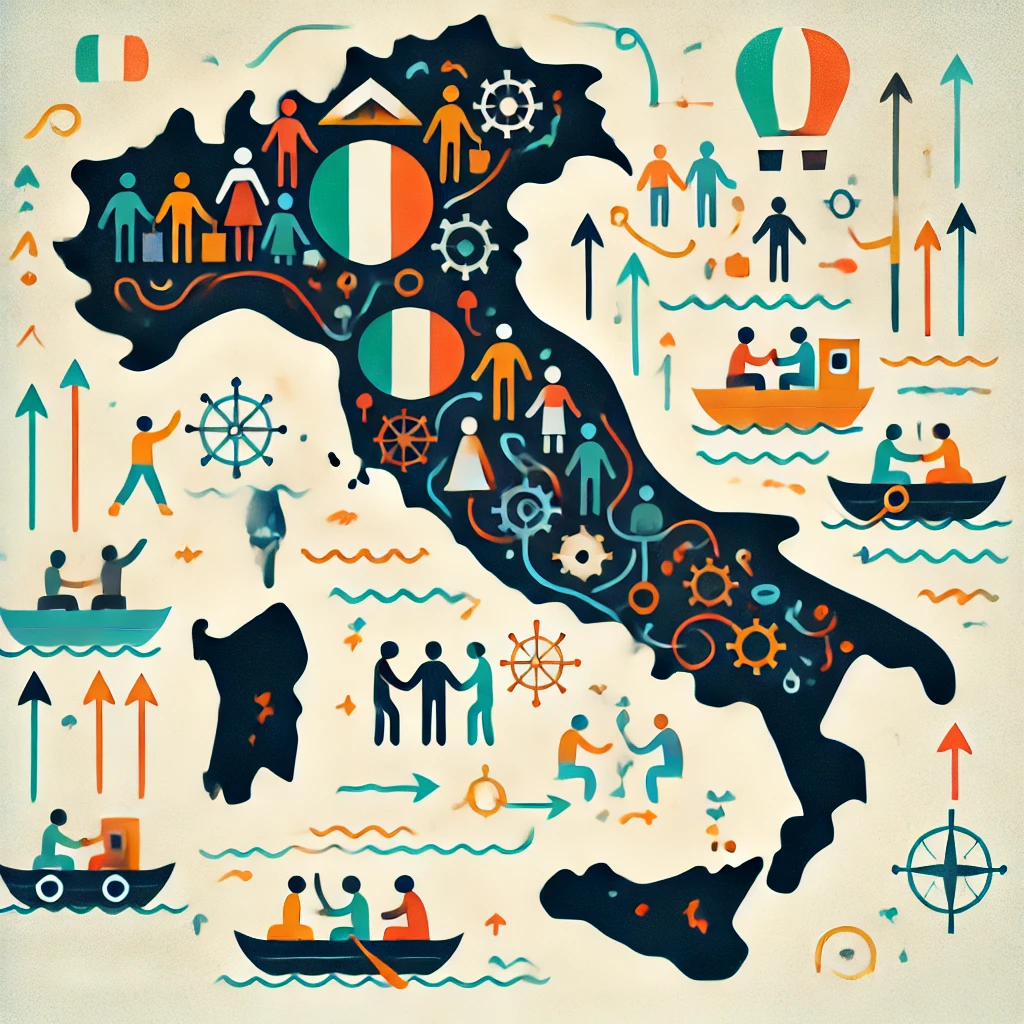
Immigration Policies in Italy: Future Predictions and New Trends
Entrance
Italy has historically been a country that has experienced large-scale migration movements. Its geographical location, historical and cultural ties, economic structure, and social dynamics have made Italy a significant destination for migrants. However, since the beginning of the 21st century, immigration policies in Italy have caused significant debate in both the social and political spheres. This article will examine Italy's current immigration policies and offer possible predictions for the future.
Italy's Immigration Policies
As a member state of the European Union (EU), Italy has developed policies regarding both free movement within the EU and immigration from abroad. While the general framework of immigration policies in Italy parallels those of other European countries, local conditions and political dynamics have created elements that differentiate Italy.
-
Refugee and Asylum Policies: Italy has been a haven for refugees and asylum seekers. However, in recent years, policies regarding the acceptance of asylum seekers have generally become stricter. In 2018, under the leadership of Interior Minister Matteo Salvini, the government's harsh stance against immigrants came to the forefront, and the "safe haven" policies were criticized. As a result, asylum applications were processed, applicants were placed in detention centers, and discriminatory policies were implemented.
-
Work and Education Immigration Policies: Italy's economic structure, low birth rates, and labor shortages have increased the need for immigrant workers. However, government-imposed challenges regarding work permits and integration limit legal work opportunities for many immigrants. Nevertheless, educational immigration has expanded, particularly for students from outside the EU. Various scholarship and support programs are available for international students wishing to pursue university education in Italy.
-
Illegal Migration and Control Policies: Italy's proximity to other European countries has made it a major route for illegal migrant flows. Many migrants arriving via the Mediterranean, particularly from Libya and Tunisia, attempt to reach Italian shores. While Italy adopted an open-door policy towards migrants during the 2015 European migration crisis, this policy has become more controlled and limited in recent years. Italy has argued for greater effectiveness in EU border security and migration policies and has made various proposals to strengthen Frontex in this context.
Predictions for the Future
Immigration policies in Italy may undergo significant changes in the future. These changes will be shaped by both local dynamics and policies within the European Union. Below are some predictions regarding this future:
-
Increased Coordination at EU Level: The European Union is moving towards deeper cooperation on immigration and border security issues. This process, which includes Italy, will require more centralized coordination of immigration policies. In the future, strengthening border controls to protect the EU's external borders may be possible with the use of more resources and technology.
-
Investing in Integration Policies: Italy will need to develop more effective policies to facilitate the integration of immigrants into society. Investments in areas such as language training, workforce participation, and cultural adaptation will help increase the social integration of immigrants and prevent social unrest. Furthermore, providing the necessary support and training to enable immigrant workers to contribute to the local economy is crucial.
-
The Role of Technology in Immigration Policy: The development of smart border technologies will play a significant role in managing migrant flows. Artificial intelligence and data analytics can be used to provide speed and accuracy in the evaluation of asylum applications. Such technological advancements will enable the immigration process to be more transparent and faster.
-
Balancing Ethics and Human Rights in Immigration: A more humane approach towards immigrants could feature more prominently in Italy's future policies. Human rights advocates across Europe are raising growing awareness of the need to protect the rights of immigrants. In this context, Italy, together with the EU, could move towards establishing more transparent and fair systems that improve refugee rights.
-
Climate Migration and New Sources of Migration: Global warming and environmental factors will significantly impact future migration flows. In particular, people in regions with dwindling water resources will be forced to migrate to safer areas. Italy could consider allocating more resources for environmental migrants and developing new systems to accommodate them.
Conclusion
Immigration policies in Italy are dynamic and influenced by social, economic, and international factors. In the future, these policies may become more integrated and human rights-oriented, while technological innovations and global challenges will shape their direction. Italy's future immigration policies will play a decisive role not only at the local level but also in shaping the common policies of the European Union.


About Post Author
