
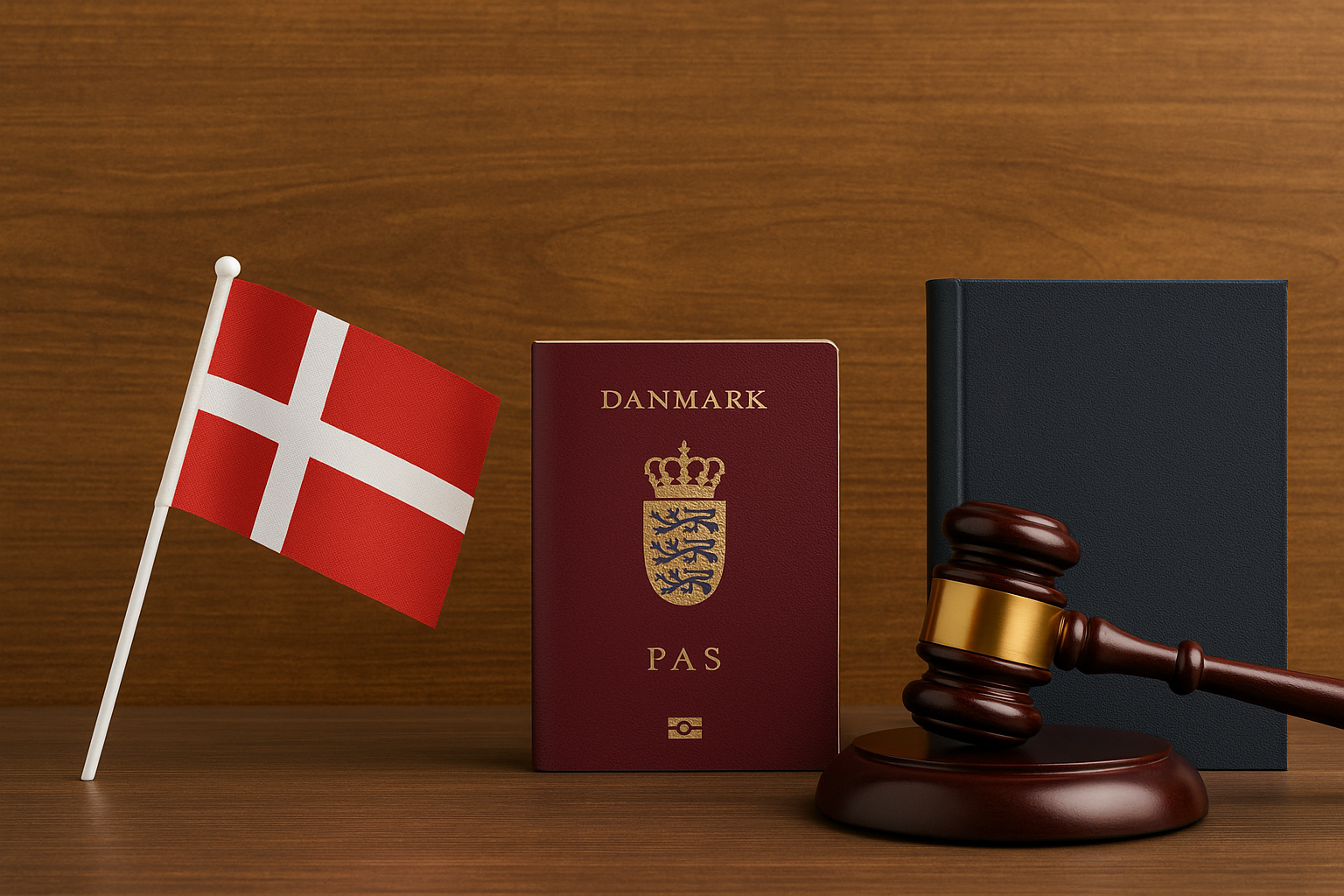
HOW TO OBTAIN DANISH CITIZENSHIP?
Entrance
The Kingdom of Denmark is a country that many foreigners wish to settle in due to its high living standards, robust welfare system, and democratic values. However, this attractive country boasts one of the strictest legal systems in Europe when it comes to acquiring citizenship. The process of obtaining Danish citizenship is only possible upon fulfilling specific legal requirements; this involves a multi-stage, highly scrutinized procedure that must be carefully followed.
This article will examine in detail, from a legal perspective, the ways to obtain Danish citizenship, the requirements, the loss of citizenship, the possibility of dual citizenship, and especially the situations faced by Turkish citizens.
1. Legal Basis of Danish Citizenship
Danish citizenship law is primarily governed by the "Danish Citizenship Act (Indfødsretsloven)," which dates back to 1950 and has been amended numerous times since . This act sets out the principles for acquiring and losing citizenship, application procedures, and the discretionary powers of the state.
In Denmark, the power to grant citizenship through a parliamentary decision (Folketinget). This aspect makes the country's citizenship policy open to both political and administrative considerations.
2. Ways to Obtain Danish Citizenship
Danish citizenship can be acquired in four main ways:
a) Citizenship by Birth (Jus Sanguinis)
Danish citizenship is primarily acquired through blood relations. This means that for a child to become a Danish citizen, it is sufficient for at least one of their parents to be a Danish citizen. Since July 1, 2014, both parents have equal rights to inherit citizenship.
b) Citizenship through Adoption
A child under the age of 15 can automatically acquire Danish citizenship upon adoption by a Danish citizen parent.
c) Citizenship through Marriage
Marrying a Danish citizen does not automatically grant citizenship. However, a person residing in Denmark as a spouse may be eligible to apply for citizenship sooner. The authenticity and duration of the marriage are considered in this process.
d) Citizenship by Naturalization
A foreign national can apply for Danish citizenship after legally residing in Denmark for a certain period, meeting specific language and integration requirements, and having no criminal record. This is the most common method and will be examined in detail below.
3. Danish Citizenship Through Naturalization
a) General Terms and Conditions
As of 2024, individuals wishing to apply for Danish citizenship must meet the following criteria:
-
At least 9 years of continuous and legal residence
(May be reduced to 8 years in some exceptional cases. 8 years for persons with refugee status.) -
clean criminal record is required.
Any imprisonment, heavy fines, or previous criminal history will result in the application being rejected. -
To be self-sufficient,
one must have lived off their own income for at least 3 years and 6 months out of the last 4 years. -
Language proficiency:
at least Danskprøve 3 level is required. -
Passing the citizenship test, called “ Indfødsretsprøven ,” which covers Danish society, history, politics, and the legal system, is required
-
Oath Requirement:
Following the 2018 reforms, individuals seeking citizenship are required to take an oath of allegiance to the constitution.
b) Application Process
Applications are submitted to the Danish Immigration Office (Udlændingestyrelsen) or the Ministry of the Interior . The application process can take approximately 18 to 24 months . Once all requirements are met, the list of applicants is submitted to the Danish Parliament, and an amendment to the citizenship law .
4. Dual Citizenship Regime
Denmark did not allow dual citizenship until 2015. However, September 1, 2015, Danish citizens can now also hold the citizenship of another country.
This situation is particularly important for Turkish citizens. Since the Republic of Türkiye also allows dual citizenship, Turkish citizens no longer have to renounce their Turkish citizenship when acquiring Danish citizenship.
However, since the obligations of each country will apply separately, military service, taxes, and public service . Therefore, individuals considering dual citizenship are advised to seek detailed legal advice.
5. Loss of Citizenship
Danish citizenship can be lost under certain circumstances:
a) Leaving at One's Own Request
A person can renounce their Danish citizenship by declaring their preference for citizenship of another country.
b) False Statement or Fraud
In cases such as using forged documents or providing false information in a citizenship application, acquired citizenship can be revoked by a court decision.
c) Long-Term Residence in a Foreign Country
In particular, individuals who were born Danish citizens but have lived abroad may automatically lose their citizenship if they do not confirm it by the age of 22.
6. Evaluation from the Perspective of Turkish Citizens
Turkish citizens face certain legal advantages and challenges in acquiring Danish citizenship:
-
the Ankara Agreement (1963) and its Additional Protocol, no special privileges are granted in citizenship procedures.
-
Denmark "integration-oriented citizenship" approach, so Danish language proficiency and integration level are the most important determining factors for Turkish citizens.
-
Special arrangements can also be made between Türkiye and Denmark regarding the deferment or paid exemption from military service.
7. Citizenship Application Rejection and Appeal Procedures
In Denmark, citizenship is not an administrative right, but a discretionary right of the state. Therefore, appealing through administrative courts is often not possible if an application is rejected. However, if there is a clear administrative error or discrimination in the application process, the applicant may pursue the following avenues:
-
Written objection petition
-
Application to the Ombudsman
-
If there is a human rights violation, an individual application can be made to the European Court of Human Rights (ECtHR)
Conclusion
Obtaining Danish citizenship is a journey requiring strict criteria and a lengthy integration process. Foreign individuals are expected to both adapt to society and fulfill the obligations demanded by the state. For Turkish citizens, the possibility of dual citizenship is a significant advantage, but it is recommended to meticulously prepare documents, prepare for language exams, and seek professional support throughout the process.
In Denmark, citizenship is not just a legal status; it also signifies active citizenship and a commitment to integration into society.


About Post Author
