
What is Czech law and the check collection process?
A VALUABLE DOCUMENT; A CHECK
Checks have become an indispensable part of commercial life. In the 1950s, the intensity of commercial activity increased, and merchants eventually faced difficulties with cash payments. One of the main reasons for this was that merchants conducted their business in different locations. A merchant in Kayseri might enter into a sales contract with a merchant in Ankara, agreeing on the delivery of goods, but payment problems could arise. For large payments, a merchant whose current financial situation is not favorable might postpone the payment to a later date. In today's developing economic environment, checks have become a necessity. Checks have replaced promissory notes and bills of exchange, which were in use for a long time. However, problems encountered in the application of bills of exchange have narrowed their scope.
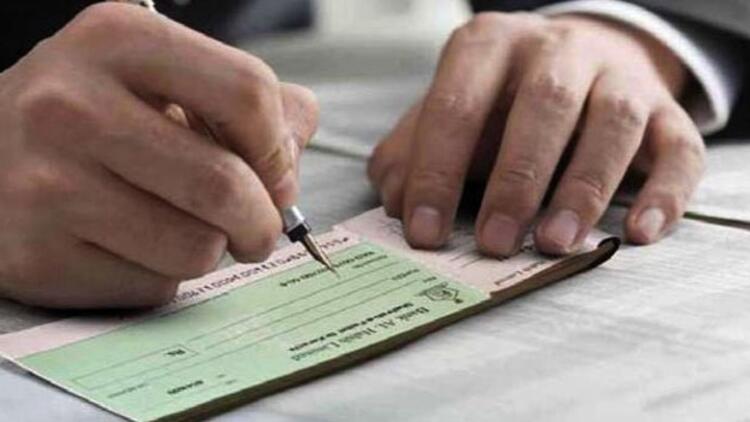
A check is a valuable document issued by a bank, authorizing and instructing the bank to transfer the relevant amount due from the checking account to the creditor. If the necessary elements are missing from a check, the document loses its validity. A check must be issued with a wet signature. Applications such as e-signatures will not be valid in place of a wet signature.
A Czech lawyer can only issue checks through natural persons or authorized agents. It is not possible to issue a check if the individual lacks legal capacity. Even if the power of attorney states that the agent can sign promissory notes, this does not cover negotiable instruments; the authorization must also specify that the agent must issue checks. If a check is issued through an unauthorized agent, the liability will only rest with the unauthorized agent. In the case of checks issued by legal entities, the binding nature of the check is limited to the scope of the company's business activities. In situations exceeding this, the legal entity may assert the claim against bona fide third parties. In such a case, the person alleged to have issued the check may be held liable for unauthorized representation.
In joint-stock companies, legal representation requires the joint signatures of at least two board members. In limited liability companies, as a rule, all partners will act as managers and therefore must sign jointly. If a special situation exists, a partnership agreement must be drawn up to suit that situation.
checks, this matter is regulated in Article 818 of the Turkish Commercial Code. It is important to pay attention to the provisions that may not be inconsistent with the nature of the check. One of the most fundamental aspects is the absence of a maturity date on a check. Checks do not have a maturity date, and the relevant regulations cannot be considered as an integral part of the bill of exchange. A check is payable on demand, and if it has a date of issue, payment is made on that date upon presentation. If a check is issued with the phrase "payable on demand" (payable on a specific day), this does not affect the legal nature of the check; however, this clause is considered null and void. Similarly, any date added to the check other than the date of issue is also considered null and void, and any clauses preventing payment do not affect the nature of the check and are deemed null and void.
The drawee of a check is the bank. No other drawee can be designated. A check can only be paid by the bank. Even if the check is presented to another branch of the bank, it will still be paid. However, it's important to note that a check cannot be presented to a different bank and paid. However, the holder can transfer it through endorsement or collection, and if the check is presented to a clearinghouse at another bank, this process will be considered valid. The primary reason for this is that the check may be presented at another bank or in a distant location. In such cases, payment can be made by delivering the check to a clearinghouse. It is accepted that the purpose of a check is to avoid cash payment, and the clearinghouse serves this purpose.
CHECK PRESENTATION PERIODS
There are established presentation periods for checks. If a check is not presented within these periods, the right to recourse is considered lost. In this case, the holder can file a claim for unjust enrichment against the drawer. It is important not to confuse the presentation period with the statute of limitations. This period is a forfeiture period. As mentioned above, the right to recourse is lost in this case. Therefore, presentation periods are of great importance. To briefly mention these periods:
If the check is payable where it was issued, 10 days
If payment is to be made in a location other than where it was issued, then 1 month
If the place of issuance and the place of payment are on the same continent but different continents, 1 month
For checks issued on different continents, there is a 3-month presentation period. There is also another separate regulation: checks issued in a European country and payable in a country bordering the Mediterranean are considered to have been issued and payable on the same continent. Therefore, in this case, a 1-month period applies.
EXPIRATION OF THE DEADLINE FOR SUBMITTING DOCUMENTS DUE TO FORCE MAJEURE
According to a Czech lawyer, it is a rule that a check must be presented within the legal time limit. However, the presentation period may be missed due to reasons beyond the holder's control. The most basic examples of this are natural disasters such as floods, fires, and earthquakes. If the check is seized by the public prosecutor's office, this is also considered a force majeure event. The holder is obligated to notify their endorser of the force majeure event as soon as possible.
The presentation period for a check begins after its issuance date. For example, a check issued on August 7, 2023, can be presented starting from August 8, 2023.
A check can be issued to bearer, to order, or to a specific person. In bearer checks, the nature of the check arises from the drawer's will or from the law. In other words, if the check indicates that the amount is payable to the bearer, or if the phrase "or to bearer" is added even though it is issued for a specific person, it will be considered a bearer check. Endorsement is not considered in a bearer check; whoever holds the check is considered the legitimate holder. Therefore, the person holding the check is considered the legitimate holder.
If a check is not paid, a protest must be issued to the debtor. The check must be presented to the bank or check office within the prescribed time limit. The date of presentation must be written on the back of the check.
A sudden cancellation of a check is possible. Cancellation of the check is not possible within the presentation period. The drawer can cancel the check, but if it has been presented to the drawee bank, the bank is obligated to make the payment.
INVOLUNTARY LOSS OF A CHECK
the drawer, the drawer can apply to the Commercial Court of First Instance in the place of payment to prevent the bank from making the payment. Lawsuits based on loss can be filed. In this case, payment of the check can be prevented, and a new check can be issued.
Checks are transferred by endorsement. The most common method in practice is writing "Pay to Ahmet ÖZASLAN, Mehmet YILMAZ (SIGNATURE)" on the back of the check.
According to the Turkish Commercial Code (TTK), the statute of limitations for a check is 3 years from the expiry of the presentation period. Under the repealed relevant law, this period was 6 months. The amendment extended this period to 3 years, making it easier for the creditor to recover their debt. The statute of limitations will also be interrupted in cases such as filing a lawsuit, notifying the lawsuit, or reporting the debt to the bankruptcy estate. After the interruption, the 3-year period will begin to run again. The most fundamental thing a creditor can do with a time-barred check is to use it as initial evidence in lawsuits. A creditor still has the right to sue and pursue enforcement through general attachment for a time-barred debt; however, these lawsuits and enforcement proceedings cannot continue if the debtor raises the defense of the statute of limitations.
In enforcement proceedings against a check, the original check must generally be presented. Otherwise, the enforcement officer should not proceed with the proceedings. However, a partial payment may have been made to the bank against a check presented by the creditor, and in this case, the bank will take the original check and give the creditor a photocopy. In this case, the creditor also has the right to pursue the claim with this photocopy.
It is useful to delve into a few details regarding checks. Explaining some of these details will help to clarify the matter. First and foremost, it should be noted that a check is a negotiable instrument. It is used by the issuer in place of cash payment.
Can a check issued as collateral be subject to enforcement proceedings? If it contains the phrase "the amount will not be paid," it indicates that the check is intended as a collateral check. Collateral checks are only used in the context of contracts that impose obligations on both parties. This is because it is given as security for the contract, and this must be proven in writing. Otherwise, such a check can be subject to enforcement proceedings. Another important point to consider is that it must be clearly understood exactly why the collateral is given. Otherwise, it is necessary to specify what the purpose is. Because of the ease of circulation and endorsement, this situation may be abused by malicious individuals holding the check.
A Czech lawyer may note that the check could also be issued as a courtesy check. In this case, the check can still be subject to enforcement proceedings. If it is not clearly stated on the check, or if the drawer lacks clear proof of wrongdoing, it can be enforced by the holder(s) acting in bad faith. A courtesy check defense cannot be made against a holder acting in good faith.
If the check is damaged, such as being torn, then the enforcement procedures specific to negotiable instruments cannot be applied. Any damage, such as tearing, to the check during the period from its issuance to presentation, will render it unsuitable for enforcement.
It's worth addressing a fundamental and important point: how will the person providing the aval (guarantee) on a check be held liable? This issue requires further examination. While the aval provider has legal liability, they cannot be held liable for reasons related to criminal law in the check. An aval is a guarantee given in favor of the drawer. This guarantee can be for the full amount or a portion of it. For a partial amount, it must be clearly stated on the check. If a signature other than the drawer's or drawee's is affixed, this third signature will be considered to have been affixed by the aval provider. If it is clear in whose favor the aval is not given, it is assumed to be given in favor of the drawer. The signature on the back of the check is an endorsement; that is, a blank endorsement. If there is an intention to provide an aval, this must be clearly stated on the back of the check. For the aval provider to be liable, the check must be presented within the presentation period, and a portion or all of the amount must not have been paid. In this case, legal action can be taken against the aval provider. The aval provider can be one or more people. In this case, there is a right of recourse against the other aval providers.
If the endorser has made a payment to the payee, they can then pursue legal action against those who preceded them. This can be done through the attachment procedure specific to negotiable instruments. The creditor is the payee; the drawer does not have the right to pursue legal action.
Everyone whose signature appears on the check is jointly and severally liable to the holder. In this case, the holder may choose to hold the endorsers and guarantors liable.
Even if the checking account is closed, the check can still be presented to the bank by the holder, and legal action can be taken. The cancellation of legal action on the grounds that the account related to the check was previously closed is not possible.
If a check has more than one issuance date, the earlier date should be considered to determine whether the check was presented to the drawee bank within the prescribed time limit. If it was not presented according to the earlier date, the holder will be deemed to have forfeited their right to the check. If the issuance date is crossed out and a new date is written on the check, the new date must be initialed or signed by the issuer to bind them. However, if the initials are not of the issuer, the check must be presented within the presentation period of the earlier date.
The enforcement proceedings can be initiated at the place where the check was issued, at the location of the drawee bank's branch, or at the debtor's place of residence. As can be seen, there is no absolute rule of jurisdiction here. If the debtor objects to jurisdiction, they must specify the competent court. The debtor must raise their objections within five days of receiving the payment order. If there is more than one debtor, the enforcement proceedings can be initiated at the residence of one of them. However, if there is malicious intent against one of the debtors, i.e., if the aim is to force the debtor to comply with the enforcement proceedings, then an objection to jurisdiction can be raised.
If it is determined during the enforcement proceedings that payment has been made based on the debt on the check, the enforcement proceedings must be cancelled. The debtor may argue, through a complaint, that the creditor does not have a right to claim based on the check, that the check is not a negotiable instrument, or that the creditor does not have the right to pursue the claim.
A Czech lawyer can issue a blank check, but in this case, all other elements of the check must be complete. If there is no issuance date on the check, the judge will automatically decide to cancel it. The important thing is that the check, with all its mandatory elements completed, is presented to the bank. Even if there are discrepancies in the writing on the check, if the signature can be identified as having been signed by the issuer, the check will still be valid.
The holder's right to recourse against the drawer, endorser, and guarantors will expire three years after the expiration of the presentation period. The statute of limitations begins from the end of the legal presentation period of the check. Presentation periods are regulated differently by law. These include ten-day, one-month, and three-month presentation periods.
Trainee Lawyer Mertcan Gökgül


About Post Author

The article title is quite interesting. However, I need more information about the content of the article. Could you provide a detailed explanation of Czech law and the check collection process? Thank you.
Hello, your article was really interesting. I was very interested in learning more about Czech lawyers and the check collection process, and your article gave me a lot of new information on this subject. However, could you please provide a little more detail about the costs of Czech lawyers that you mentioned in your article? Thank you!