
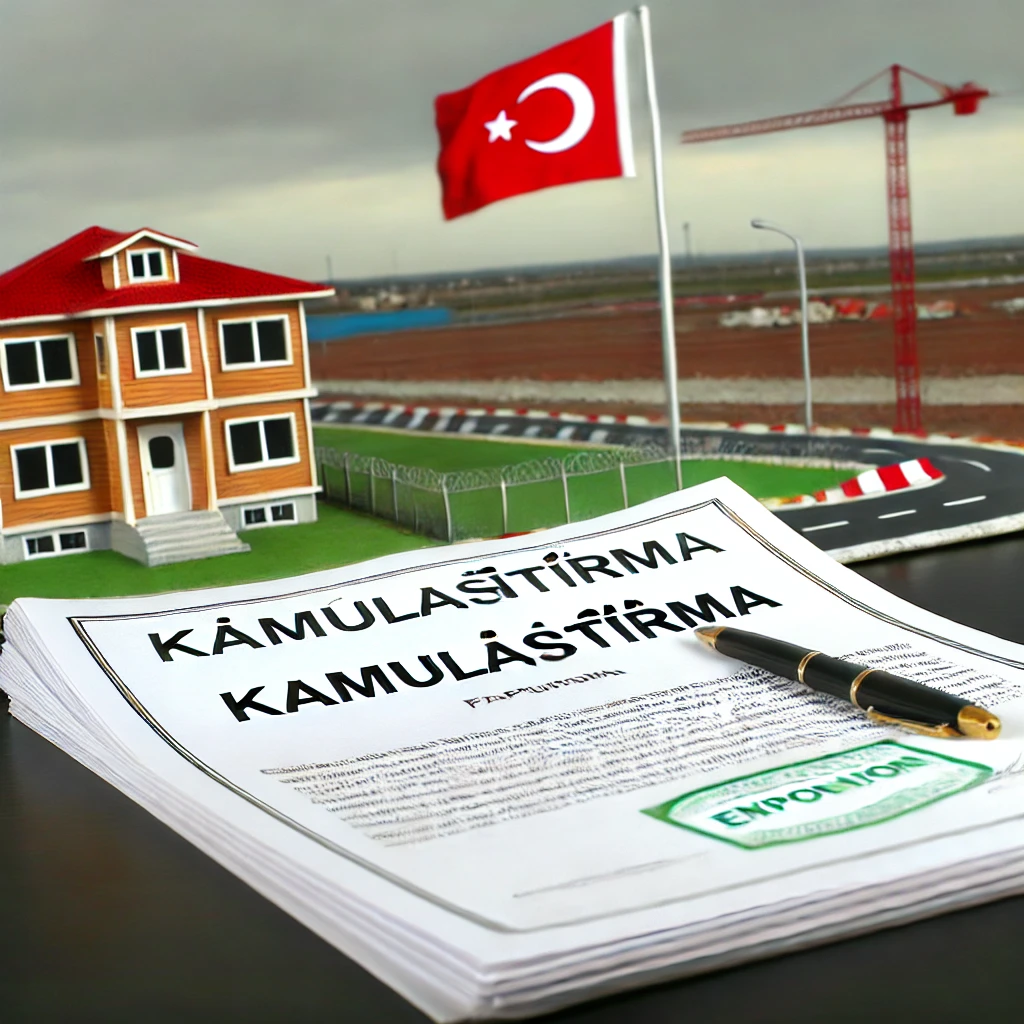
Expropriation According to Turkish Administrative Law
Expropriation is the process by which the state, on grounds of public interest, seizes privately owned immovable property and transfers its ownership to the public. In Turkish Administrative Law, expropriation is regulated by Article 46 of the Constitution and Law No. 2942 on Expropriation. The purpose of expropriation is for the state to acquire immovable properties needed for the realization of projects that benefit society and the public. Since this process constitutes an interference with property rights, a careful balance must be struck between public interest and individual rights.
1. Constitutional Basis of Expropriation
Article 46 of the Constitution of the Republic of Turkey constitutes the legal basis for expropriation. According to the Constitution, expropriation can only be carried out for the public good, and the price of the expropriated property must be paid in cash and upfront. However, in some cases, such as urban development projects, payment in installments is permitted, and these payments must be completed within a maximum period of five years.
While the Constitution protects the right to property, it also allows the state to restrict this right when public interest is at stake. Article 35 of the Constitution, which regulates the right to property, limits the impact of the expropriation process on the right to property and stipulates that such intervention must be regulated by law.
2. Legal Basis for Expropriation: Law No. 2942 on Expropriation
The procedures and principles of expropriation are determined by the Expropriation Law No. 2942. This law regulates issues such as how the expropriation process is carried out, how the expropriation compensation is calculated, and how payment is made to the owner of the expropriated property. The law divides the expropriation process into the following stages:
2.1. Obtaining a Public Interest Decision
The expropriation process begins with the issuance of a public interest decision. This decision is made by the relevant administration and is a prerequisite establishing the necessity of expropriation. The issuance of a public interest decision forms the legal basis for interfering with the property rights of the owners of the immovable property.
2.2. Expropriation Decision
Following the decision of public interest, the relevant administration makes an expropriation decision. This decision is notified to the owner of the property. The property owner has the right to file a lawsuit against this decision in administrative courts. Expropriation decisions can only be made for the purpose of implementing projects that are in the public interest. Expropriations made arbitrarily or for personal gain can be annulled in administrative courts.
2.3. Determination of Compensation
The expropriation compensation is determined based on the actual value of the property. The value of the property to be expropriated is determined by agreement between the parties, taking into account the market value. If an agreement cannot be reached, the court determines the expropriation compensation based on an expert report. The expropriation compensation is paid to the property owner in cash. However, in some cases, payment may be made in installments. According to the Constitution, if payment is to be made in installments, it must be paid within a maximum of five years.
2.4. Payment of Compensation for Expropriation
Payment of compensation for expropriation is a mandatory step for the completion of the expropriation process. The compensation must be paid to the property owner in full upfront. Seizing the property without payment constitutes a violation of property rights, and in this case, the property owner may claim compensation.
3. Objections to Expropriation and Legal Remedies
Property owners can file a lawsuit in administrative courts regarding the expropriation process. Objections to the expropriation decision must be made within **30 days** of the notification of the decision. The administrative court reviews whether the expropriation decision is in the public interest and whether the process was legally compliant. If illegality is detected during the expropriation process, the expropriation process may be annulled.
Furthermore, if the compensation amount is considered too low, the property owner can apply to the court to request an increase. In this case, a new compensation amount may be determined by the court based on expert reports.
4. Expropriation Without Compensation
Expropriation without compensation means the state seizes a property without completing the expropriation process. In Turkish law, lawsuits against expropriation without compensation are a way for property owners to protect their rights against this unjust intervention by the state. In cases of expropriation without compensation, the property owner can apply to the administrative court to claim compensation for their property. Such lawsuits are of great importance in protecting property rights and defending the rights of individuals against the state.
5. Legal Consequences of Expropriation
As a result of expropriation, ownership of the property passes to the state. The expropriated property is allocated for public service and ceases to be privately owned. The compensation paid to the property owner is the compensation for the interference with their property rights. However, if the compensation is not paid or the expropriation process is not carried out properly, the property owner can seek redress through the courts.
Since expropriation constitutes a serious interference with property rights, a balance must be struck between public interest and individual rights in this process. In Turkish law, expropriation is strictly regulated by the Constitution and the Expropriation Law, and individuals can defend their rights through legal means in case of violations of these rules.
6. Conclusion and Evaluation
Expropriation is a necessary tool for the implementation of projects for the public good. However, it is crucial that any interference with property rights during this process is lawful and that the rights of property owners are protected. Administrative oversight and judicial review are available at every stage of the expropriation process. Ensuring fairness in determining the compensation amount and preventing unlawful seizure of property are critically important for the protection of property rights.
In conclusion, while expropriation in Turkish administrative law is a process that serves the public interest, it is also supported by legal mechanisms that protect the property rights of individuals. The expropriation process continues to exist as an important legal area for ensuring a balance of rights between the state and individuals.


About Post Author
