
Exemption from Liability for Vehicle Depreciation
 Exemption from Liability for Vehicle Depreciation: Legal Basis and Supreme Court Approaches
🔹 Introduction: What is Vehicle Depreciation and Who is Responsible?
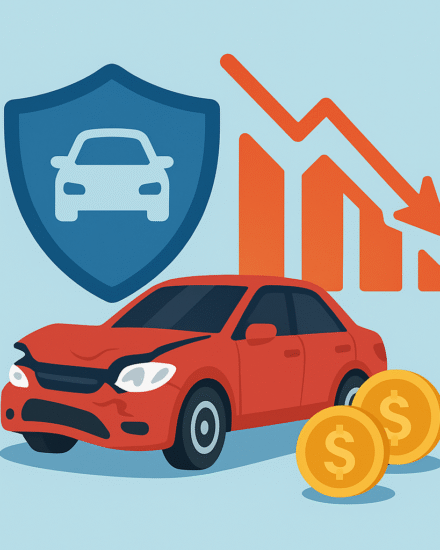
The decrease in the resale value of a vehicle repaired after a traffic accident is called vehicle depreciation. No matter how well the damage is repaired, the vehicle now has a "damaged vehicle" history, which reduces its market value. According to the Turkish Code of Obligations (TBK) and the Highway Traffic Law (KTK), this damage must be covered by the negligent driver and their insurance company.
However, in every case, the liability of the at-fault party or the insurer is not unlimited. In some special circumstances, it is possible to be exempted from liability or to limit liability. In this article, we will examine the circumstances under which liability can be exempted in vehicle depreciation claims, under headings such as contributory negligence, pre-existing damage, vehicle age, mileage and usage, and insurance limits.
⸻
🔹 Development: States of Exemption from Responsibility
1. 🔸 Contributory Negligence (The Injured Party's Own Fault)
One of the most common defenses in claims for diminished value is contributory negligence. According to Article 52 of the Turkish Code of Obligations, if the injured party contributed to the occurrence or increase of the damage, the compensation is reduced proportionally.
Example:
If the vehicle involved in the accident was improperly parked or maneuvered at unnecessary speed, this behavior may be considered contributory negligence.
➡ Result: Compensation for diminished value is reduced according to the degree of fault.
Keywords: contributory negligence, vehicle depreciation, compensation reduction.
2. 🔸 Pre-existing damages to the vehicle
If the vehicle was already damaged before the accident or had undergone previous repairs, the depreciation in value caused by the new accident will be limited. As frequently emphasized in Supreme Court rulings, "the rate of depreciation should be reduced for vehicles with pre-existing damage."
It can be used as a defense:
"The vehicle was previously damaged, and a significant portion of the depreciation is due to the previous accident."
➡ In this case, the negligent driver or insurance company may be completely relieved of liability, or the amount of depreciation may be significantly reduced.
Keywords: prior damage, Supreme Court decision, vehicle history, depreciation discount.
3. 🔸 Vehicle Age and Mileage
If a vehicle is older than 10 years or has more than 160,000 km on the odometer, its depreciation in the used car market decreases.
Insurance companies generally reduce the compensation amount based on the vehicle's age and mileage.
Court of Appeals approach:
In its decision numbered E.2019/5611 K.2021/3762, the 17th Civil Chamber of the Court of Appeals stated that "the depreciation rate should be kept low for old and high-mileage vehicles."
➡ This is the basis for the insurance company to be partially relieved of liability.
Keywords: vehicle age, mileage, depreciation formula, insurance limit.
4. 🔸 Insurance Limits and Policy Coverage
Compulsory Motor Vehicle Insurance (ZMMS) provides liability within a certain limit.
If the depreciation claim exceeds the policy limit, the insurance company is not liable for the excess amount.
In this case, the excess can be claimed directly from the at-fault driver.
Example:
If the insurance limit is 120,000 TL, in a claim of 150,000 TL, the insurance company will pay 120,000 TL, and the remaining 30,000 TL will be charged to the driver.
Keywords: mandatory traffic insurance, policy limit, insurance company liability.
5. 🔸 Nature of the Accident: Force Majeure or Third-Party Action
If the accident occurred due to force majeure (e.g., an animal suddenly appearing on the road, a natural event, etc.) or was entirely caused by the intervention of a third party, the driver is not considered at fault.
➡ In such cases, it is possible to be completely relieved of liability.
Insurance companies can also use the "lack of fault" defense in these situations.
Keywords: force majeure, third party, lack of fault, exemption from liability.
6. 🔸 Repair Quality and Service Preference
In some cases, the vehicle owner's choice of a substandard or unauthorized service may increase the damage.
The insurance company may be partially relieved of liability on the grounds of "conduct that led to increased damage" (Turkish Code of Obligations, Article 44).
Example:
If a vehicle has been repaired with non-equivalent parts instead of original parts, and this has increased its depreciation in value, this difference will not be charged to the insurance company.
Keywords: specialized service, original parts, equivalent parts, repair failure.
🔹 Conclusion: Complete Responsibility Isn't Essential; a Balance of Fairness is Key
Vehicle depreciation is a complex issue, both technically and legally. Neither the negligent driver nor the insurance company is fully liable in every case.
Supreme Court precedents also consider factors such as fault, vehicle age, previous damages, contributory negligence, and insurance limits, while maintaining a balance of equity.
Individuals claiming compensation for diminished value following a traffic accident must submit their application with accurate documentation including vehicle history, mileage, and degree of fault. Similarly, insurance companies and drivers should also responsibly utilize their provisions for waiving liability.


About Post Author
