
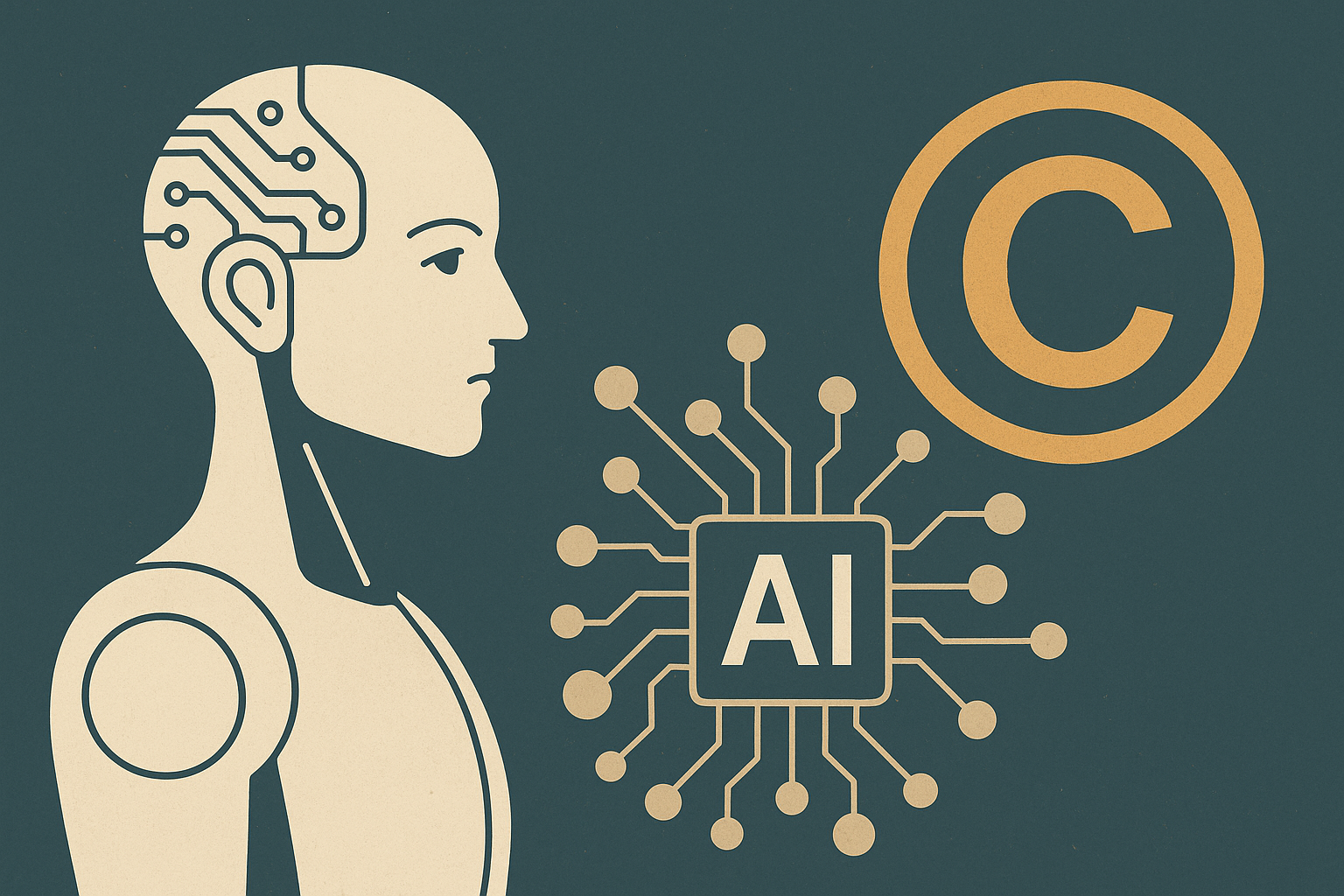
Evaluation of Works Generated by Artificial Intelligence from the Perspective of Copyright Regime / Istanbul Lawyer
1. Introduction
The breathtaking advancements in artificial intelligence (AI) technologies in recent years have forced legal systems to confront problems they had never encountered before. Foremost among these of whether content generated by AI (text, images, music, design, etc.) is subject to copyright protection .
Turkish law, specifically the Law No. 5846 on Intellectual and Artistic Works (FSEK) , protects works based on human creative labor, and is built upon the concept of a "natural person as the author." In this context, how content generated by artificial intelligence should be evaluated under the classical copyright regime is debatable.
2. Conditions of Copyright Protection
According to the Law on Intellectual and Artistic Works (FSEK), for an intellectual product to be protected as a work, it must possess the following elements:
-
a scientific, literary, musical, art, or cinematic work (Article 1/B).
-
formed (the expression is preserved, not the thought)
-
It is the product of a creative activity.
-
The ability to establish ownership (the author must be a natural person)
Therefore, for AI-generated content to be considered a work of art, it must be the product of creative effort, and that effort must be attributed to a real person.
3. Types of AI-Generated Content
Artificial intelligence technologies are observed to generate content particularly in the following areas:
-
Text generation (ChatGPT, Gemini, etc.)
-
Visuals and illustrations (DALL-E, Midjourney)
-
Music (Amper, Aiva)
-
Coding and software development
-
Automatic translation and summarization
-
Architecture and design
These contents are often without human intervention, through patterns learned spontaneously by the algorithm. This makes the classic definition of "author" difficult to define.
4. The Situation from the Perspective of Turkish Law
4.1. The Author Must Be a Natural Person
According to Article 1/B of the Copyright Law, the author is "the person who created the work." This definition is legally applicable only to natural persons . Accepting artificial intelligence as the author is not possible under the current system.
4.2. The Problem of Lack of Ownership of AI Content
If AI-generated content is created without direct human creative intervention, it cannot be considered a "work" under the Turkish Copyright Law. This raises the issue of "public domain."
5. Approaches in International Law
5.1. US Law
The US Copyright Office explicitly made the following decision in 2022:
"Copyright is not granted to content that is generated solely by artificial intelligence and has no human input."
However, copyright can arise in content that is driven by human creativity if there is human intervention.
5.2. European Union
There are no specific regulations directly related to AI in the European Union copyright law directives. However, the current system primarily focuses on protection based on human creativity.
5.3. United Kingdom
In England, Article 9(3) of the Copyright, Designs and Patents Act of 1988 offers a limited solution, stating that "in the case of computer-generated works, the author is the person who made the arrangements necessary for the creation of the work".
6. Proposed Solutions in Turkish Law
In Turkish law, the following alternatives can be discussed regarding whether content created with artificial intelligence can be subject to copyright protection:
6.1. Protection Based on Human Intervention
If AI is used merely as a tool, and a human makes the creative choices, then the content owner is human. For example:
-
A person who creates visuals by typing prompts
-
The screenwriter who gave the story to AI
-
Designer who edited the final output
Since the ultimate creative choices of the individual are decisive in such works , classical copyright protection is possible.
6.2. Collaborative Work Interpretation
If AI and humans have jointly produced content, it could be argued that a collaborative work (joint work) has been created. However, this approach is insufficient because AI lacks legal personality.
6.3. New Legal Status and Legislative Arrangements
To protect the ever-increasing amount of AI-generated content:
-
The law that requires the author to be a human being can be changed
-
Explicit regulations could be put in place to classify AI content as public domain
-
Those who direct/initiate the production of a work may be granted rights for a limited period
-
Special types of rights, such as the "machine-made" regime being debated in Europe, may come to the forefront.
7. Problems Encountered in Practice
-
Unauthorized use of AI-generated images leads to copyright disputes.
-
someone illegally appropriates the output of an AI project , where should the complaint be filed?
-
Selling copyright-free content as NFTs is technically possible, but legally debatable.
-
The burden of proof for claiming authorship becomes quite complex.
8. Future Perspective: Should Artificial Intelligence Be Granted Legal Personality?
Some legal experts argue that with advancing technology, AI could be granted limited legal personality . However, this approach would require significant systemic transformations not only in copyright law but also in areas such as contract law, criminal liability, and tax regimes.
Therefore, instead of granting legal personality to AI in the medium term, expanding human-centered copyright lawsmay be a more practical and adaptable solution.
9. Conclusion
The capacity of artificial intelligence to create works signals a structural transformation that challenges the classic copyright law regime. While the Copyright Law and similar regulations protect a system based on human creativity, they exclude algorithmic production from their scope.
It is clear that Turkish law will need new regulations to address this gap in the coming period. For now, the safest approach is to claim authorship for content where human intervention is a determining factor, and to seek solutions through a public use regime for fully automated productions.


About Post Author
